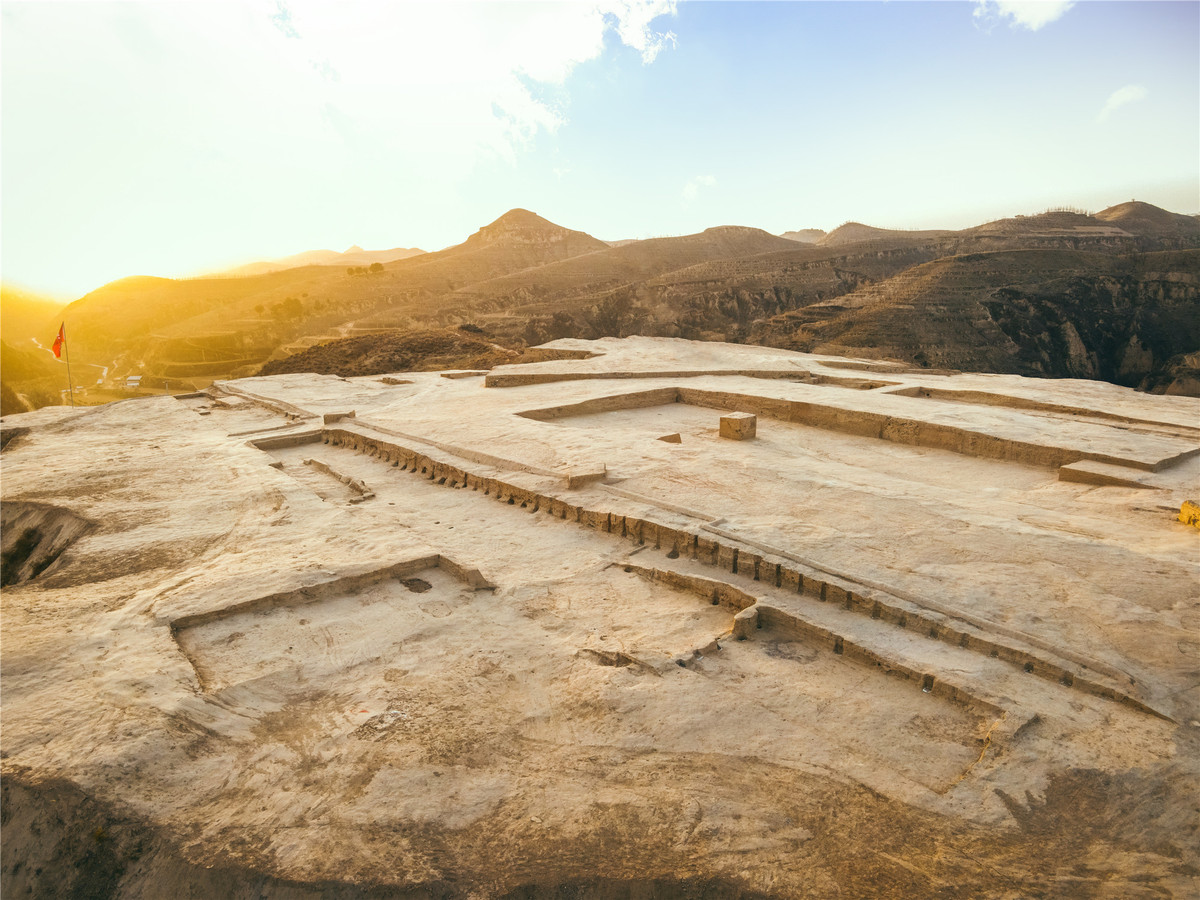
Zhaigou Site
Introduction
The Zhaigou Site, one of China's top 10 archaeological discoveries of 2023, is a significant Shang Dynasty (c. 16th century-11th century BC) settlement located in Qingjian county, Shaanxi province. Spanning approximately 3 million square meters on the Loess Plateau, the site offers invaluable insights into the Shang civilization. The site features a range of ruins, including large-scale rammed-earth buildings, tombs, bronze casting ruins and civil living areas. The archaeological findings at Zhaigou highlight the advanced nature of the Bronze Age civilization in northern Shaanxi, emphasizing the influence of Shang civilization on its surrounding regions.
History
The Zhaigou Site dates back to the late Shang Dynasty, which was marked by the Shang civilization's peak in bronze work and complex societal structures. The site's location on the Loess Plateau has historically been significant due to its strategic position and resources. Archaeological evidence suggests that Zhaigou may have been an important regional center subordinate to the central Shang regime, which was based in present-day Henan province. The site's discovery has helped archaeologists piece together the sociopolitical dynamics of the Shang Dynasty, particularly in terms of local states and their interactions with the central administration.
Archaeological Findings
Excavation History
The Zhaigou Site has been the focus of archaeological attention due to its size and the complexity of artifacts uncovered. Excavations have revealed the largest and richest collection of Shang Dynasty remnants yet found on the Loess Plateau. Initial interest in the area began in the 1940s when bronzeware was accidentally discovered by locals, leading to further investigations. The recent excavation has provided a clearer understanding of the site's layout, including its central settlement features and tombs, which indicate the high status of those interred there.
Artifacts and Structures
The site has yielded a wide array of artifacts, including burial chariots, bronze accessories, jade ware, bone ware, lacquerware and tortoise shells found in noble tombs. One notable find is a chariot with double straight shafts, the earliest tangible artifact of its kind in China. These artifacts suggest a sophisticated level of craftsmanship and cultural practices. The presence of large-scale rammed-earth buildings and bronze casting ruins indicates advanced architectural and metallurgical techniques.
Cultural Significance
The cultural significance of the Zhaigou Site lies in its demonstration of the Shang Dynasty's influence beyond its central region. The artifacts and structures suggest that the area was a significant settlement with a developed social hierarchy and cultural practices. The site's findings contribute to the understanding of the Shang Dynasty's expansion and integration of local states into its political and cultural sphere. The Zhaigou Site also offers valuable information on the exchange of ideas and technology between different regions during the Bronze Age, highlighting the interconnectedness of ancient Chinese civilizations.
Conservation Efforts
Conservation efforts at the Zhaigou Site have been aimed at preserving the integrity of the archaeological remains while facilitating further research. The site is subject to protective measures to prevent damage from environmental factors and human interference. These efforts are coordinated by the National Cultural Heritage Administration and local archaeological institutes. The site's inclusion in China's top archaeological discoveries has increased public awareness and interest, which aids in securing resources and support for ongoing preservation and study.








